Six rounds of interviews. A take-home case study. Three reference calls. A "culture fit" conversation with the CEO.
And still, by month three, everyone knows it isn't working.
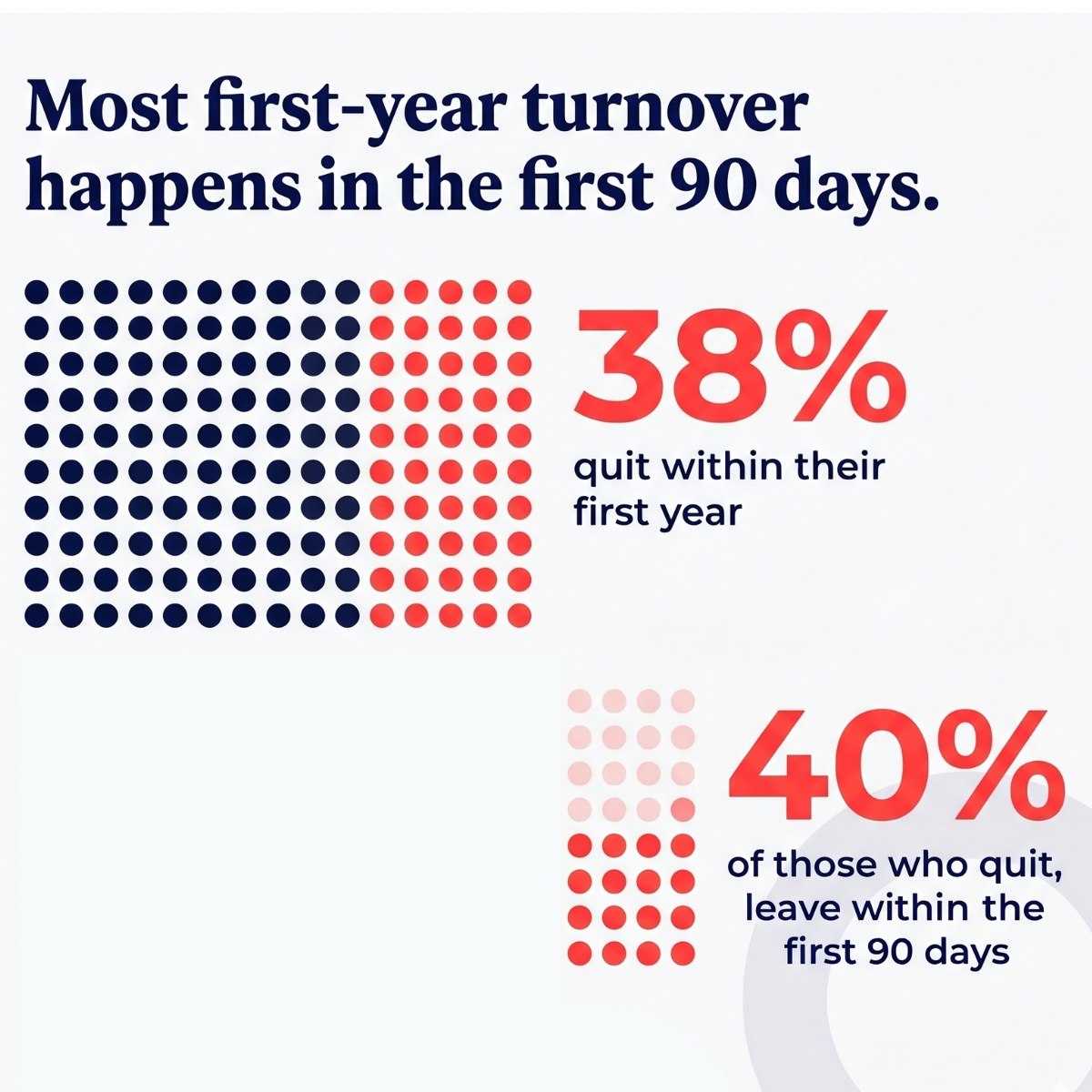
Robert Half found 28% of new hires would leave within 90 days when the role didn't meet expectations — usually over culture, communication, or working style, not technical skill. Traditional interviews fail both sides here. A paid working interview lets the candidate and the employer test those things before anyone commits.
Remote companies figured this out early. When you can't rely on hallway vibes or lunch-table chemistry, you're forced to ask a harder question: What does this person actually produce when they're working?
The answer isn't another interview. It's a paid working interview—what some teams call a paid trial or a paid work sample. The concept is simple: instead of relying on interview performance to predict hiring success, you pay candidates to do a scoped version of the actual job. You evaluate the work itself.
The Unpaid Homework Problem
Before we talk about what works, let's name what doesn't.
Somewhere along the way, "take-home assignments" became standard practice in the hiring process. Companies hand candidates a 4-hour project, promise to review it carefully, and then... nothing. No feedback. No compensation. Just silence, or a form rejection three weeks later.
This isn't rigorous hiring. It's extraction.
Candidates—especially those from underrepresented backgrounds, those with caregiving responsibilities, those already working demanding jobs—can't afford to gamble dozens of hours on companies that treat their labor as disposable. The result? You're not selecting for the best candidates. You're selecting for the candidates with the most spare time.
Remote-first companies have rejected this model entirely. Not because they're soft, but because they understand something traditional employers don't: respect is a signal, and candidates are watching.
What a Paid Working Interview Actually Looks Like
The companies leading remote work have each developed their own version of the paid working interview. The details differ, but the philosophy is consistent: pay people fairly to do real work, then evaluate the work itself.
| Company | Format | Compensation | What They're Evaluating |
|---|---|---|---|
| PostHog | "SuperDay"—one full paid workday | $1,000 flat rate | Prioritization under time pressure, communication |
| Doist | 10-hour test task for technical roles | Paid hourly | Deep work focus, written communication, craft |
| Zapier | Paid trial project, ~40 hours over 2–8 weeks | Paid, flexible scheduling | Work quality, async communication, real-tool fluency |
Notice what's missing from every column: interview performance. Presentation skills. The ability to make small talk with a stranger over Zoom.
These companies have stopped optimizing for signals that don't predict success. Instead, they're watching candidates do the job—async, autonomously, with real stakes—exactly like they would after being hired.
PostHog's approach is particularly instructive. Their SuperDay is explicitly designed to be "too much work for one person to complete in a day"—not to stress candidates, but to see how they prioritize. They pay $1,000 regardless of outcome, can split the day across multiple sessions to accommodate schedules, and make offers within days. The process tests for exactly what remote work demands: self-direction, clear communication, and the ability to ship under ambiguity.
Doist, the company behind Todoist, takes a different approach. For design and engineering roles, candidates complete a paid 10-hour test task directly related to their role. It's intense, but compensated—and it's how they've built a team spanning 39 countries, hiring slowly and deliberately over more than a decade.
Why Paid Working Interviews Work for Remote Teams
In an office, you can hide. You can look busy. You can build relationships through proximity and let the halo effect carry you through performance reviews.
Remote work strips that away. What remains is output: the quality of your thinking, the clarity of your communication, the reliability of your follow-through. A paid working interview mirrors this reality. It tests for the actual skills remote work demands—self-direction, written communication, async collaboration—rather than the skills that make someone impressive in a conference room.
The logic is straightforward: when both sides test the working relationship before committing, fewer people discover—months too late—that they made a mistake.
The Objections (And How to Address Them)
"It's expensive."
A typical PostHog SuperDay costs $1,000. SHRM estimates that replacing an employee can cost 50% to 200% of their annual salary, depending on seniority and complexity. The Work Institute pegged 2023 U.S. turnover costs at nearly $900 billion. The math isn't close.
"Top candidates won't commit the time."
This objection assumes candidates have better options. In reality, talented people are often more willing to invest in a process that respects their time with fair compensation and genuine evaluation. What drives candidates away isn't the commitment—it's unpaid speculation and ghosting.
"We'll expose proprietary work."
Scope the trial around self-contained tasks. PostHog uses tasks that mirror real work without exposing sensitive data. Doist pulls from their actual backlog but selects items without confidential context. The risk is manageable; the upside isn't optional.
"Legal says contractor misclassification."
This one deserves more than a hand-wave. Contractor classification rules vary significantly by jurisdiction, and what works in the U.S. may create complications in France, Brazil, or Australia.
If you have a legal team, the path is straightforward: a clearly scoped independent contractor agreement with defined deliverables, a fixed timeframe, and explicit hour caps. Keep the engagement short and tied to specific outputs.
If you'd rather skip the scoping work entirely, global payroll platforms like Deel, Remofirst, or Oyster have done it for you—pre-built compliant agreements across most jurisdictions, with hour caps and payment structures baked in. For candidates in high-risk jurisdictions, some companies offer the trial as an extended final interview stage with a stipend rather than contractor compensation.
Either way, bring your legal team a specific proposal—scope, platform, agreement structure—rather than an open-ended question. "Can we do paid trials?" invites a blanket no. "Can we run a 10-hour paid trial using Deel's standard contractor agreement?" invites a yes with edits.
The Hard Cases
No hiring approach works perfectly for every situation. Paid trials have genuine limitations worth acknowledging.
Candidates who can't take time off their current job
Not everyone can carve out a full day—or even 10 hours—while employed. PostHog addresses this by allowing candidates to split their SuperDay across multiple sessions and accommodating time zones. Some companies offer evening or weekend options. Others extend the timeline significantly, letting candidates work in smaller increments over weeks.
The key is flexibility without abandoning the principle. A rigid "complete this in one sitting" requirement excludes strong candidates; a "complete this however works for your schedule" approach preserves the evaluation while expanding access.
Executive or highly specialized roles
For senior leaders, "real work" is harder to scope into a discrete project. You can't ask a VP candidate to make actual strategic decisions for a company they don't yet work for.
Some companies address this with extended paid consulting engagements—essentially a mutual trial period before the formal offer. Others use intensive scenario-based exercises: present a real strategic challenge the company is facing, pay the candidate for a day of deep work on it, then discuss their approach. You're not evaluating the answer—you're evaluating how they think, communicate, and engage with ambiguity.
Confidentiality when candidates work for competitors
If your top candidate works for a direct competitor, both sides face legitimate concerns about information sharing. The candidate can't reveal proprietary knowledge; you can't share sensitive details about your own operations.
Address this by designing trials around public information and generic challenges. A marketing trial might analyze publicly available campaigns rather than internal metrics. An engineering trial might involve open-source contributions or isolated technical problems. The goal is evaluating how someone works, not extracting what they know.
The Evolution of the Model
It's worth noting that even companies pioneering paid trials continue to iterate on the approach.
Buffer, for years, was famous for their 45-day "Buffer Bootcamp"—a paid contract period before full-time employment. In 2019, they retired it. Their reasoning is instructive: while the bootcamp helped evaluate fit, the extended probationary period created psychological safety issues for new hires and inadvertently disadvantaged candidates with families or preexisting medical conditions who couldn't easily accept contractor status.
Buffer's evolution isn't a repudiation of paid trials—it's a refinement. They still use paid test tasks in their hiring process. What they abandoned was the prolonged uncertainty that came with an extended trial period. The lesson: paid work samples are valuable; extended limbo is not.
How to Run Your First Paid Working Interview
Start with a single role—ideally one you've struggled to hire well for in the past.
Design a project that mirrors actual day-to-day work. Not a theoretical case study. Not a presentation. Real work: a pull request, a campaign draft, a support ticket queue, a product spec. Scope it to 8–16 hours for individual contributors, or a single focused day for senior roles.
Set compensation at the 50th–80th percentile of what you'd pay for contract work in that function. Paying fairly isn't charity—it's how you attract candidates who have options.
Run the trial using your actual tools. If your team lives in Linear, Notion, and Slack, so does the candidate. You're not just evaluating their output; you're evaluating how they operate in your environment.
Build a rubric before the first trial starts. Define what "excellent" looks like across 3–5 dimensions that matter for the role. Collect structured feedback from everyone who interacts with the candidate's work. Gut feelings are fine as tiebreakers, but they shouldn't drive the decision.
Close the loop fast. Within 48 hours, every candidate should know the outcome—and receive substantive feedback on their work, whether you're extending an offer or not. This is where most companies fumble, and where you can differentiate.
The Hiring Process You'd Actually Want to Experience
Imagine applying for a job and knowing, from the first conversation, exactly what the evaluation would look like. No ambiguity about how many rounds. No mystery assignments. No waiting in silence for weeks.
Instead: a clear scope, fair pay, real work, and honest feedback—regardless of outcome.
This is what paid trials offer. Not just better signal for employers, but a fundamentally more humane experience for candidates. The companies doing this well aren't just hiring better. They're building reputations that compound. Every candidate who goes through a well-run trial—hired or not—becomes an ambassador for your culture.
Remote work demands that we rethink everything built for the office. The interview—a 20th-century artifact designed for in-person chemistry—is long overdue for replacement.
Paid working interviews are the replacement.